AI Agent Frameworks Complete Comparison 2026 — LangGraph·CrewAI·AutoGen·OpenAI Agents SDK Practical Guide
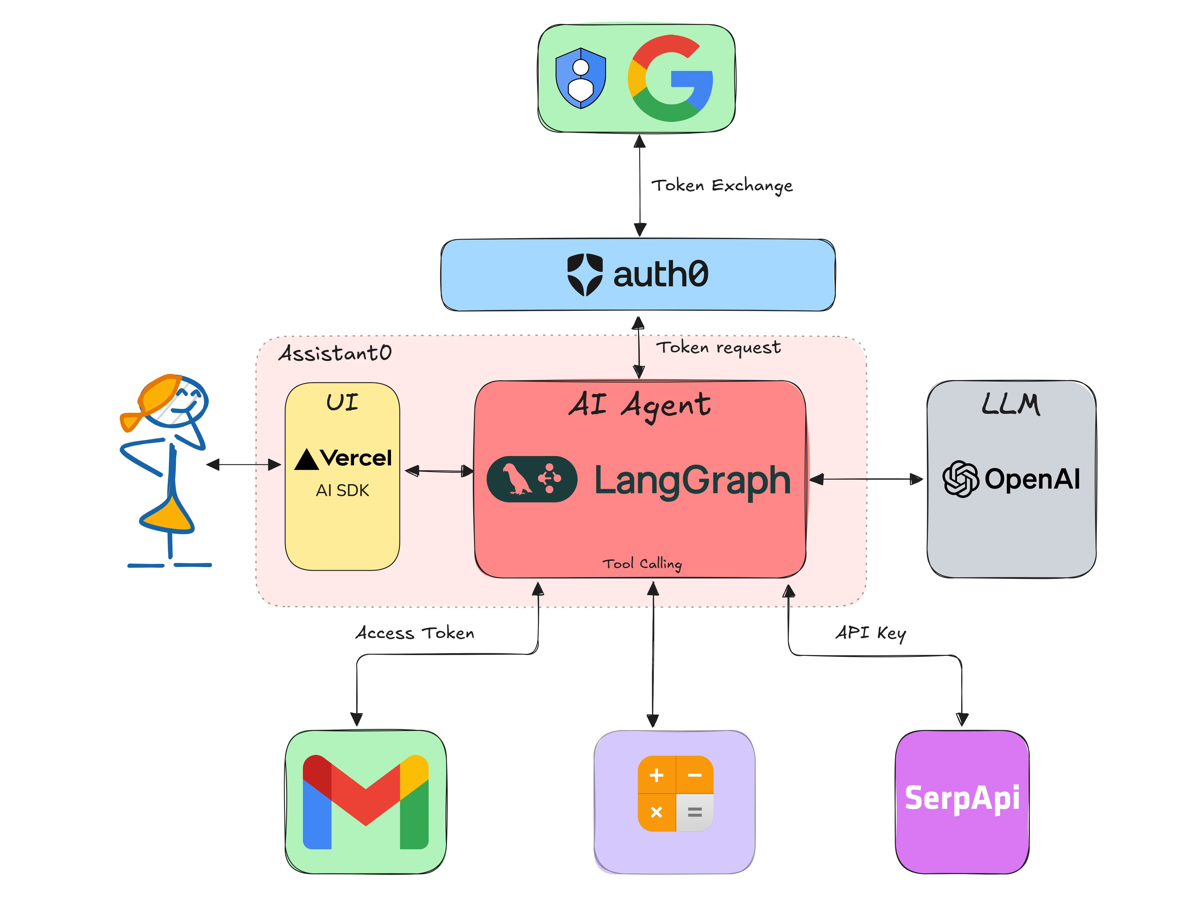
📸 How to build an AI Assistant with LangGraph and Next.js
What Are AI Agent Frameworks? — Why You Need to Know Now
By 2026, AI agents have evolved beyond simple chatbots into digital workers that autonomously perform complex tasks. Moving beyond single LLMs using tools to achieve goals, multi-agent systems where multiple AI agents collaborate as teams have become mainstream. LangGraph, CrewAI, AutoGen, OpenAI Agents SDK — which framework should you choose? This guide provides a complete comparison of each framework's features and ideal use cases.
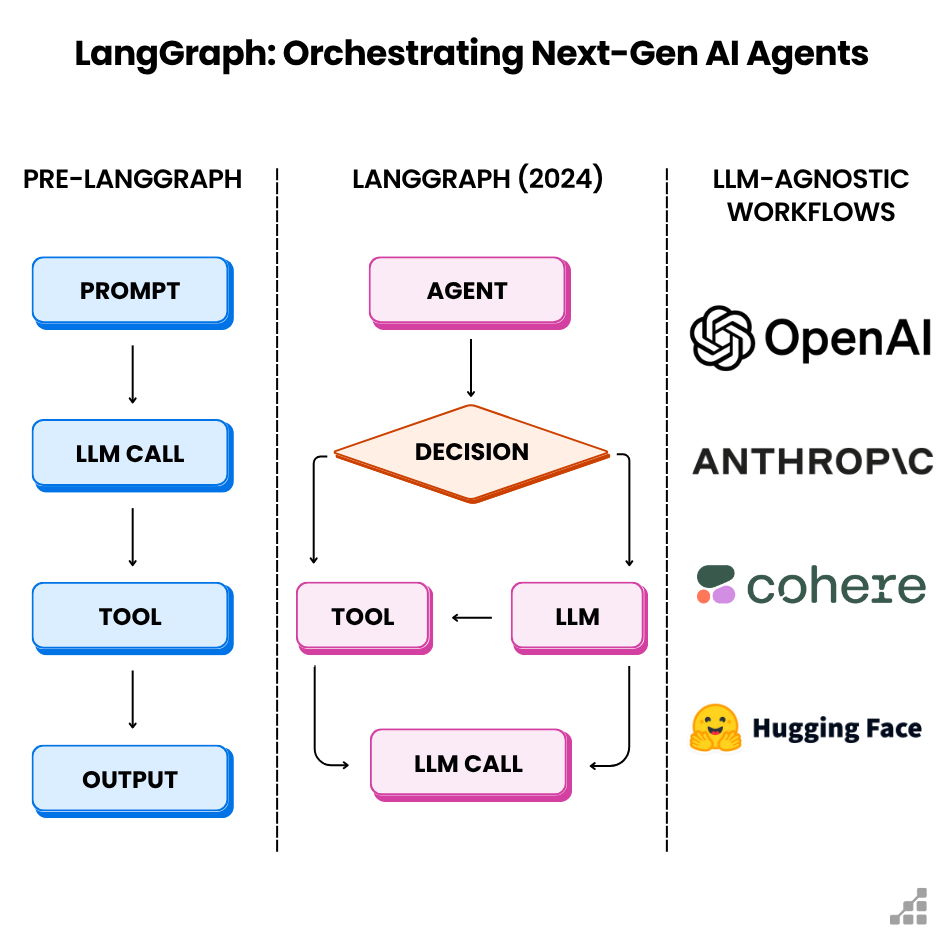
📸 Building AI Workflows with LangGraph: Practical Use Cases ...
Comparison of the Top 4 AI Agent Frameworks in 2026
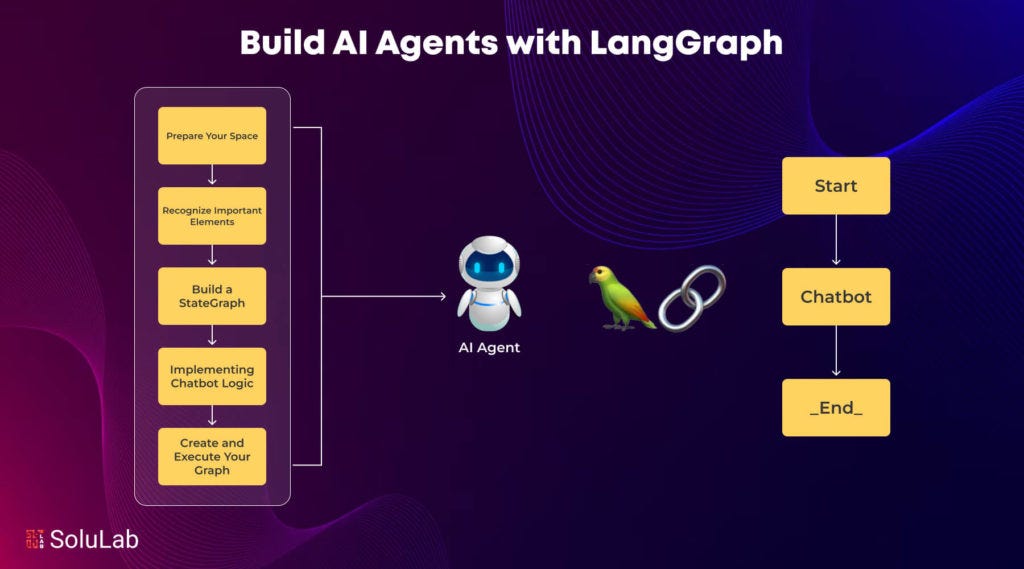
📸 I Built a Full Agentic AI App in a Weekend Using LangGraph ...
1. LangGraph — The King of Structured Workflows
LangGraph is the LangChain ecosystem's multi-agent solution, boasting 47 million PyPI downloads and the largest community ecosystem.
Key Features:
- Graph-based Workflows: Explicitly define agent flows with nodes and edges
- State Management: Systematically track complex state transitions
- Cycle Support: Handle iterative loops and conditional branching
- LangSmith Integration: Track and debug agent execution processes
Ideal Use Cases: Complex reasoning chains, RAG pipelines, enterprise workflows requiring fine-grained control
from langgraph.graph import StateGraph, END
from typing import TypedDict

class AgentState(TypedDict):
    messages: list
    next_agent: str

# Define agent workflow graph
workflow = StateGraph(AgentState)
workflow.add_node("researcher", research_node)
workflow.add_node("writer", writer_node)
workflow.add_edge("researcher", "writer")
workflow.add_edge("writer", END)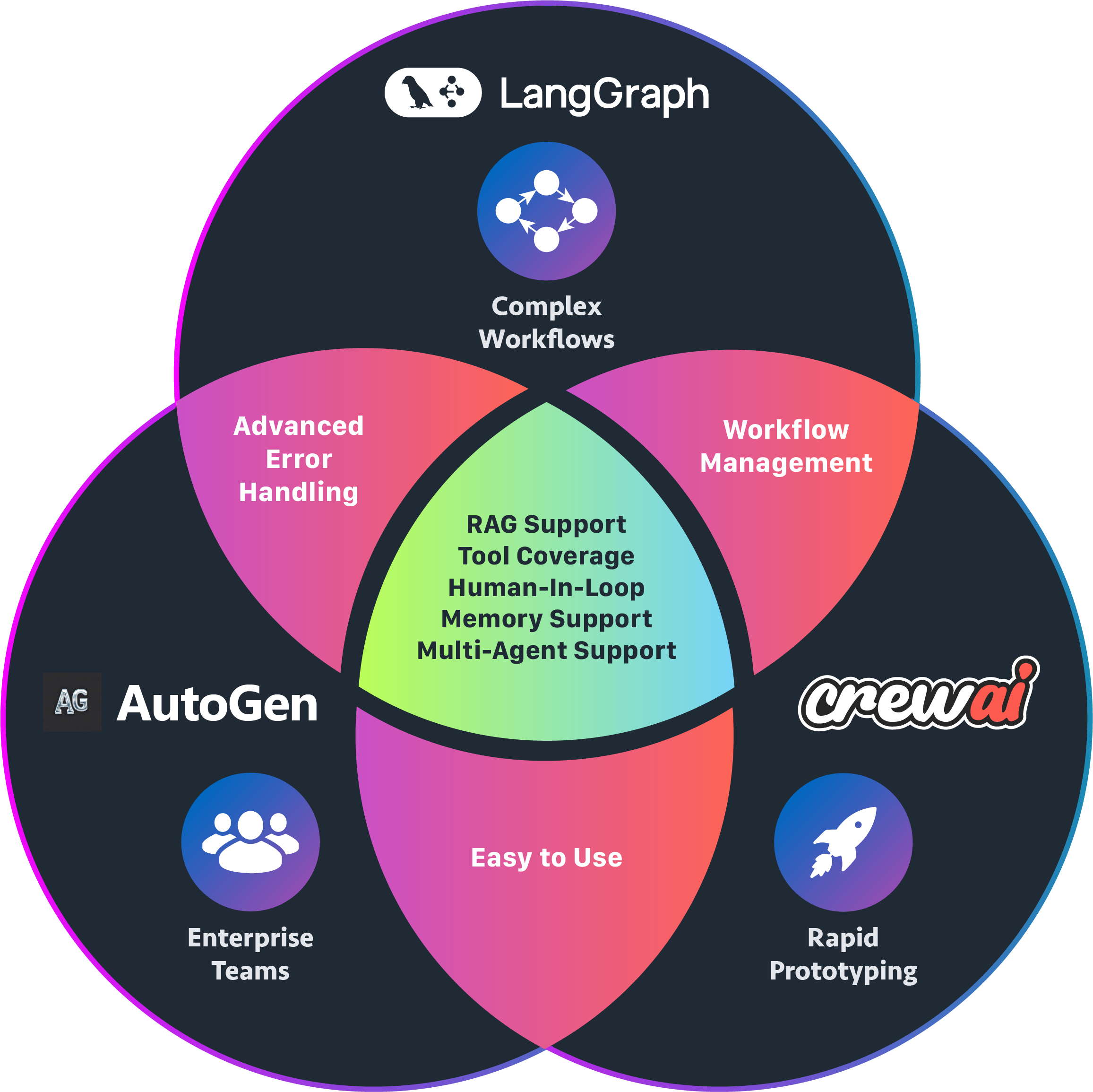
📸 Top 3 Trending Agentic AI Frameworks: LangGraph vs AutoGen ...
2. CrewAI — The Leader in Role-Based Multi-Agent Systems
CrewAI is a framework inspired by human team organizations, growing fastest in role-based agent systems. By 2026, A2A (Agent-to-Agent) protocol support has been added, enabling direct communication between agents.
Key Features:
- Role-based Agents: Define role, goal, and backstory for each agent
- Crew Concept: Multiple agents collaborate as one team (Crew)
- Intuitive API: Quick start without complex setup
- A2A Protocol Support: Direct communication and collaboration between agents
Ideal Use Cases: Content generation pipelines, research automation, team-based task delegation
from crewai import Agent, Task, Crew, Process

researcher = Agent(
    role='Senior Researcher',
    goal='Analyze latest AI trends',
    backstory='AI research expert with 10 years experience',
    verbose=True
)

writer = Agent(
    role='Content Writer',
    goal='Write technical blog posts',
    backstory='Professional tech writer for developer audiences'
)

crew = Crew(
    agents=[researcher, writer],
    tasks=[research_task, write_task],
    process=Process.sequential
)
3. AutoGen — Microsoft's Conversational Multi-Agent Framework
Developed by Microsoft Research, AutoGen uses conversation between agents as its core mechanism. It excels particularly in implementing coding agents, with tight integration with Azure AI as a key advantage.
Key Features:
- ConversableAgent: Agent design based on message exchange
- Human-in-the-loop: Seamlessly integrate human intervention when needed
- Code Execution: Safely execute code in Docker sandbox
- GroupChat: Support group conversations among multiple agents
Ideal Use Cases: Code generation and review, tasks requiring human supervision, Microsoft Azure ecosystem
4. OpenAI Agents SDK — The Lowest Entry Barrier
OpenAI's official agent SDK boasts the lowest entry barrier, offering perfect compatibility with OpenAI GPT models. The Handoff mechanism makes task delegation between agents intuitive.
Key Features:
- Handoff: Task delegation mechanism between agents
- Built-in Tools: Built-in tools like web search and code execution
- Tracing: Built-in tracing and debugging tools
- Concise Syntax: Implement powerful agents with minimal code
Framework Selection Guide
If you're unsure which framework to choose, refer to these criteria:
- Fine-grained Control + Complex Workflows → LangGraph
- Role-based Team Collaboration + Fast Development → CrewAI
- Coding Automation + Human Intervention Required → AutoGen
- OpenAI Models + Quick Start → OpenAI Agents SDK
- Enterprise + Orchestration Complexity → LangGraph + CrewAI Combination
Claude Opus 4.6's Native Agent Teams
Even without external frameworks, you can implement multi-agent systems directly in Claude Code using Claude Opus 4.6's Agent Teams. The orchestrator agent executes sub-agents in parallel, each operating independently in tmux panels. It's gaining developer attention for its ability to handle large-scale coding projects with distributed processing without complex setup.
2026 AI Agent Trends: MCP and A2A Protocols
The key keyword for the 2026 agent ecosystem is interoperability. Following MCP (Model Context Protocol) establishing itself as the standard for AI-tool connections, A2A (Agent-to-Agent) Protocol is emerging as the standard for direct agent-to-agent communication. CrewAI has begun native A2A support, with community integrations in development for LangGraph and AutoGen.
In particular, many teams are adopting composite usage patterns. Using LangChain for tool management and retrieval, while delegating multi-agent orchestration to CrewAI or AutoGen. Not being tied to a single framework and leveraging each framework's strengths is the key trend in 2026 AI agent development.
Conclusion — The Agent Era, Start Right Now
AI agent frameworks have become essential skills for developers in 2026. LangGraph's precise control, CrewAI's intuitive collaboration, AutoGen's conversational design, OpenAI Agents SDK's low entry barrier — each has its own strengths. The most important thing is to start right now. Begin with a simple single agent and gradually evolve into a multi-agent system.
댓글
댓글 쓰기