📸 Anthropic Unveils Claude Opus 4.1, Bolstering Coding and ...
What is Claude Opus 4.6? — Anthropic's Most Powerful Flagship Model
On February 5, 2026, Anthropic officially launched Claude Opus 4.6, its most powerful model to date. This isn't just a simple upgrade—it's a paradigm shift that opens the door to the AI agent era. With enhanced coding capabilities, Agent Teams, a 1M token context window, and Microsoft Office integration—this article covers everything you need to know about Claude Opus 4.6.
📸 Claude Opus 4.6 adds adaptive thinking, 128K output ...
Key New Features at a Glance
📸 Mastering the 5 Key Advantages of Claude Opus 4.6 Agent ...
① Agent Teams — Parallel AI Coding Revolution
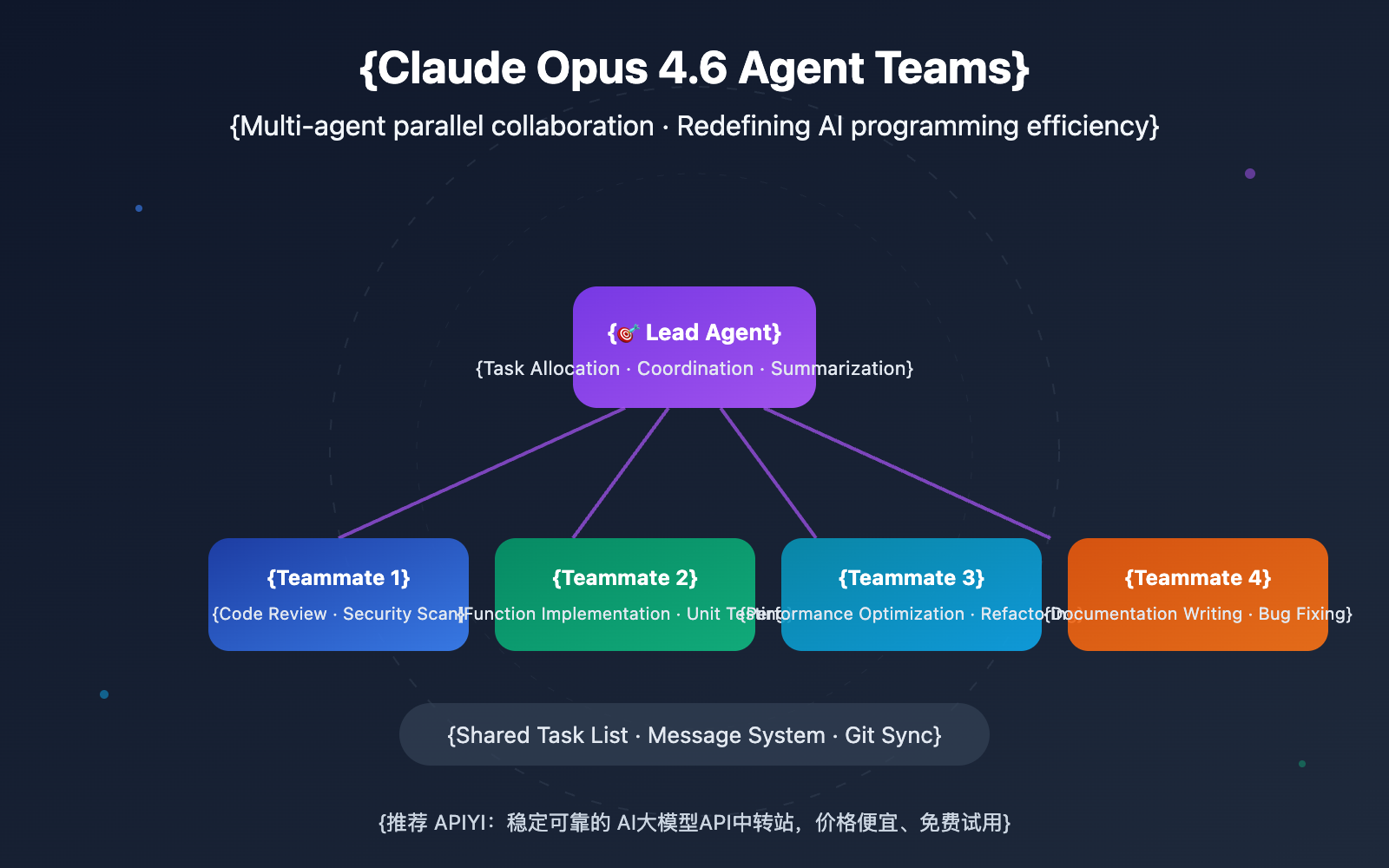
The most innovative feature of Claude Opus 4.6 is undoubtedly Agent Teams. In Claude Code, a single orchestrator runs multiple sub-agents in parallel across tmux panels, with each agent handling independent tasks.
In an actual demo, Anthropic used agent teams to build a 100,000-line C compiler. This compiler can boot Linux 6.9 on x86, ARM, and RISC-V, generating over 300 comments on Hacker News and sparking significant discussion.
- Orchestrator breaks down tasks into independent subtasks
- Each sub-agent runs in parallel in separate tmux panels
- Dramatically reduces time for complex, long-term projects
- Currently in research preview, available in Claude Code
![Opus 4.6 [1m] is showing a 1,000K context window in Claude ...](https://preview.redd.it/opus-4-6-1m-is-showing-a-1-000k-context-window-in-claude-v0-4wus5numlnlg1.png?width=1594&format=png&auto=webp&s=582e463c2fb614c7f5b4328e60b3858e439dda46)
📸 Opus 4.6 [1m] is showing a 1,000K context window in Claude ...
② 1M Token Context Window (Beta)
For the first time in the Opus class, 1M token context window is supported in beta. This is a 5x expansion from the previous 200K. In the MRCR v2 8-needle 1M variant test, Opus 4.6 achieved 76% accuracy, overwhelmingly surpassing Sonnet 4.5's 18.5%. Working with entire large-scale codebases in context is now a reality.
③ 128K Output Tokens
Output tokens have been doubled from 64K to 128K. This enables longer thinking budgets and generation of more complete, polished responses.
④ Adaptive Thinking
A new recommended thinking mode called Adaptive Thinking has been introduced. When set to thinking: {type: "adaptive"}, the model automatically adjusts its thinking level based on problem complexity. The previous budget_tokens approach is no longer recommended.
⑤ Effort Parameter (GA Release)
The Effort parameter is now officially released, allowing developers to fine-tune intelligence, speed, and cost:
- low — Fast response, low cost
- medium — Balanced performance
- high — Default, optimal quality
- max — Maximum performance, no beta header needed
⑥ Context Compaction (Beta)
Context Compaction has been introduced in beta, automatically summarizing context on the server side. When context approaches the window limit, the API automatically summarizes earlier parts, effectively supporting unlimited conversations.
Benchmarks — Dominating Industry Leadership
Claude Opus 4.6 has demonstrated industry-leading performance across major evaluation metrics:
- Terminal-Bench 2.0: #1 in real-world agent coding evaluation
- Humanity's Last Exam: #1 in complex multidisciplinary reasoning
- BrowseComp: #1 in online information exploration
- GDPval-AA: Outperforms GPT-5.2 by 144 Elo points in economic value tasks like finance and law
- Cybersecurity: Discovered 500 zero-day vulnerabilities in open-source code
Claude in Excel & Claude in PowerPoint
Microsoft Office integration for real-world productivity has been significantly enhanced:
Claude in Excel Upgrade
Claude in Excel, upgraded based on Opus 4.6, now directly supports native Excel operations like pivot table editing and conditional formatting. Data analysis is completely transformed.
Claude in PowerPoint (Research Preview)
Claude in PowerPoint, integrated as a side panel, has been released in research preview. From presentation creation to content organization and design suggestions, you can complete your PPT through conversation with Claude.
Pricing and Access
Pricing remains the same as the previous version at $5 input / $25 output (per 1 million tokens). The API model name is claude-opus-4-6, and it's available across all major cloud platforms including claude.ai, Anthropic API, AWS Bedrock, Google Cloud Vertex AI, and Microsoft Azure.
# API Usage Example
import anthropic

client = anthropic.Anthropic()
response = client.messages.create(
    model="claude-opus-4-6",
    max_tokens=16000,
    thinking={
        "type": "adaptive"
    },
    messages=[{
        "role": "user",
        "content": "Design a complex microservices architecture"
    }]
)
Claude Opus 4.6 Usage Tips
- Simple tasks: Use effort=low or Sonnet 4.6 → Save costs
- Complex coding & analysis: Keep effort=high (default)
- Large projects: Combine 1M tokens + Agent Teams
- Long-running tasks: Enable Context Compaction
- When quick reasoning is needed: Set effort=medium to avoid excessive thinking
Conclusion — The Dawn of the AI Agent Era
Claude Opus 4.6 goes beyond a simple chatbot AI to open the true autonomous agent era. Parallel development with agent teams, understanding massive codebases with 1M tokens, and real-world work through Office integration—Anthropic has set a new standard in the AI flagship competition. If you're a developer, experience agent teams in Claude Code right now.
댓글
댓글 쓰기